OpenAI launches Businesses in ChatGPT, companies can now claim their own profiles
OpenAI starts the beta of Businesses in ChatGPT with Business Hub for claiming profiles and Business Agents for serving customers directly inside ChatGPT.
OpenAI launched Businesses in ChatGPT in beta on November 10, 2026. It gives companies a new way to show up and interact with the 1.2 billion people who use ChatGPT each week, according to OpenAI's announcement. Two products arrived at the same time: Business Hub, for claiming and managing a company profile, and Business Agents, for answering customer questions directly inside ChatGPT.
1. What Business Hub is
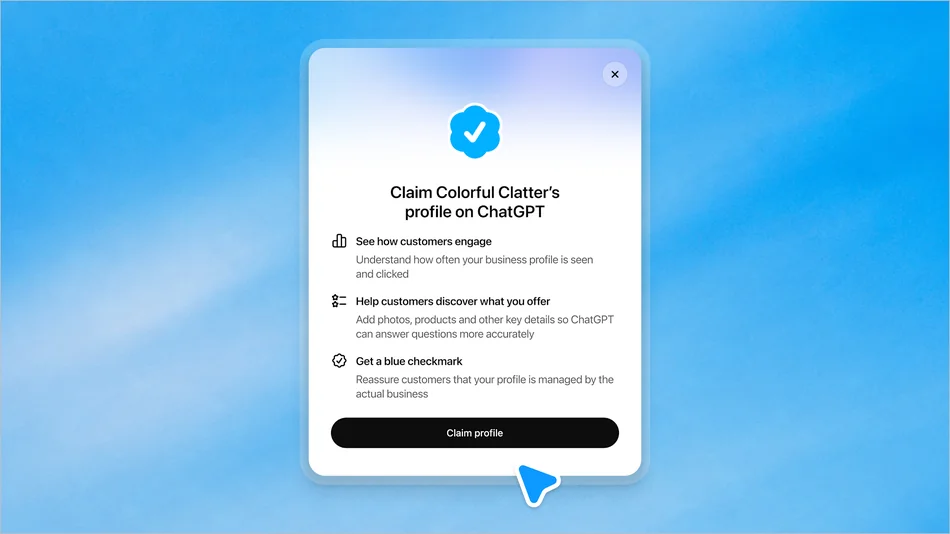
Business Hub is where companies claim their organization in ChatGPT. Once the claim is verified, a business can update key details and add self-service product feeds with current pricing and availability.
Any eligible business located where ChatGPT is available can claim its profile. Existing OpenAI Enterprise customers and advertisers can work directly with their OpenAI representative, while Shopify merchants can connect their store through Business Hub or the Shopify admin.
2. Data on how people engage with your business
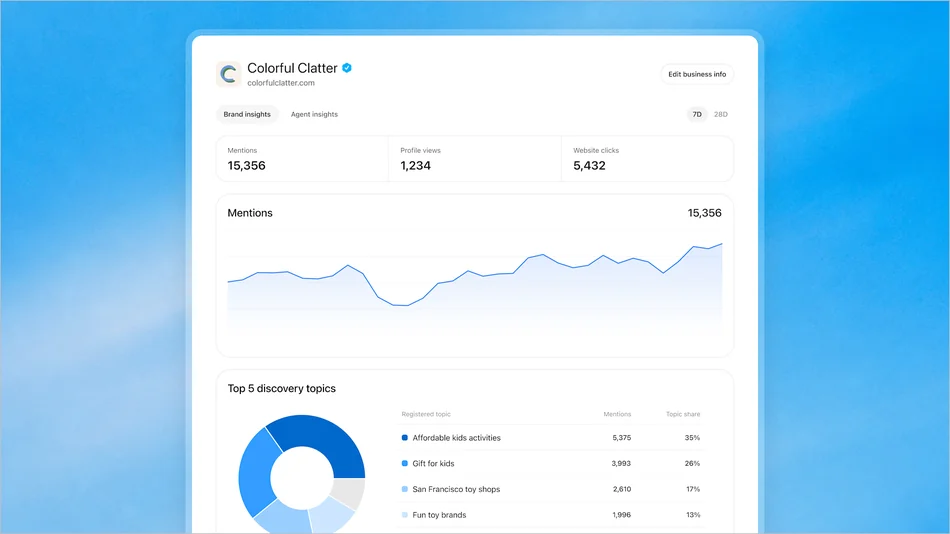
After verification, Business Hub shows aggregated insights: how often your business gets mentioned, how many website clicks it receives, and discovery topics, which are the common themes in conversations citing your website.
OpenAI stresses privacy: user conversations and Business Agent chats are not shared with businesses. Insights only appear once conversations or interactions pass certain thresholds, so smaller businesses may see limited data at first.
3. Business Agents: a brand chatbot inside ChatGPT
A Business Agent is an AI assistant built by the company itself to answer customer questions. When a business appears in a ChatGPT response, users can open its profile and start a conversation with the agent to compare products or ask which features fit their needs.
That conversation is clearly labeled, kept separate from the customer's original ChatGPT thread, and distinct from ChatGPT's independent answers. For now, agents are only available to eligible ecommerce and online service businesses in the United States.
4. Agents can double as ads
Reuters reports that businesses can sponsor their Business Agent and use it as the destination for ChatGPT Ads, with sponsored placements clearly labeled. This builds on Sponsored Agents, which OpenAI began testing in September 2026, according to TNW.
Right now the agent cannot complete a purchase, booking, or order lookup. It explains products and policies, then sends people to the business website to finish the action, ShiftDelete reports citing OpenAI's documentation. OpenAI is building agent payments with Visa, but that is not live yet.
5. What it means for you
This is part of a bigger shift: ChatGPT wants to be where people find products, not just where they ask questions. For business owners in Malaysia, the feature is not open outside the US yet, but the first step is available now.
- Claim your profile. Businesses anywhere ChatGPT is available can claim their profile via chatgpt.com/business-hub. Verify early so your information stays current.
- Keep details fresh. Accurate pricing, availability, and company details determine how ChatGPT represents you when users ask.
- Watch your mentions. After verification, use the insights to learn what people ask about your business and fix the gaps in your information.
- Wait for the rollout. OpenAI says Business Agents will expand to more markets and business categories over time. If you sell online, get listed early.
Sources
- Introducing Businesses in ChatGPT (OpenAI)
- OpenAI lets businesses claim ChatGPT profiles, adds AI agents for US e-commerce firms (Reuters)
- ChatGPT Business Hub is now live (Search Engine Land)