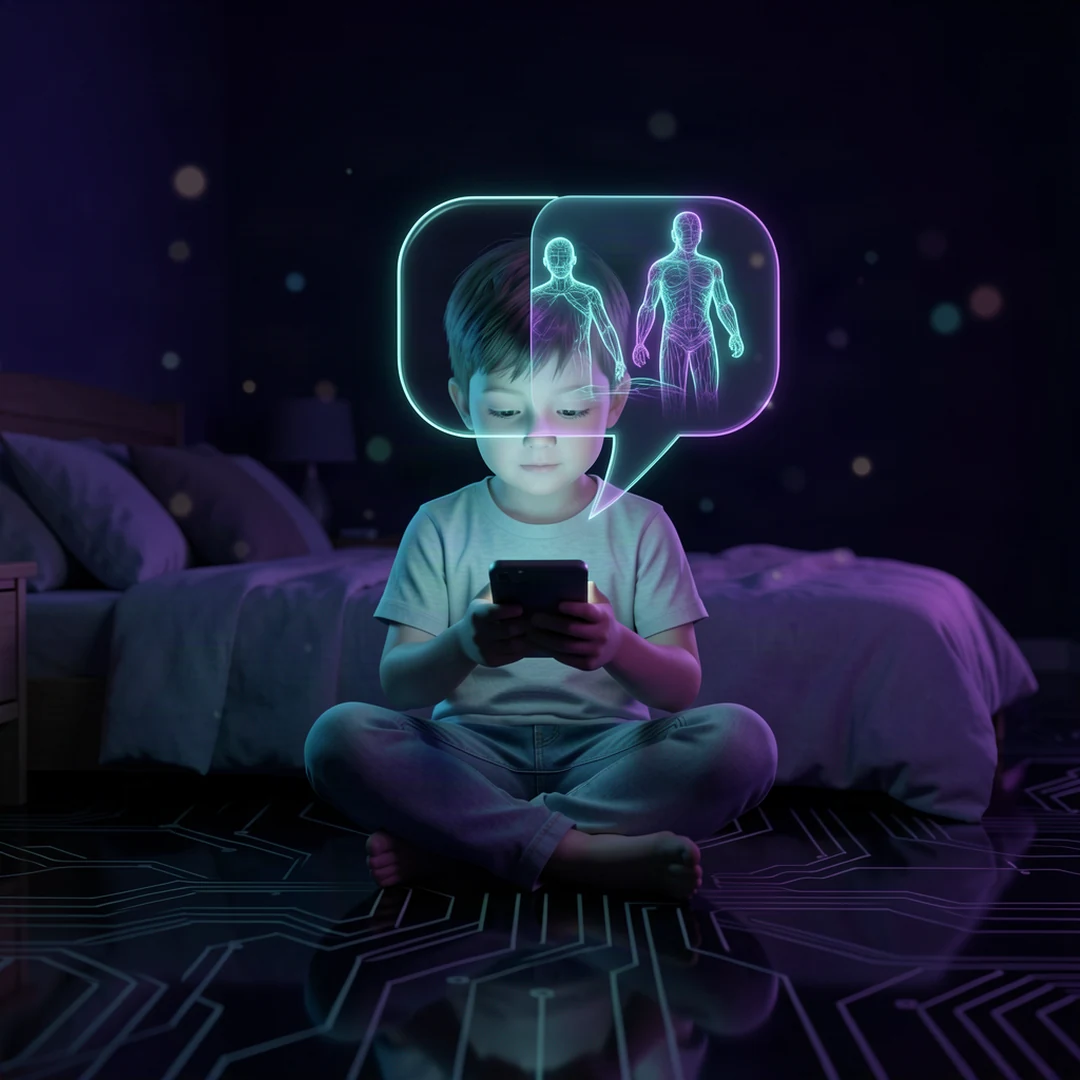
New York bans AI chatbots from pretending to be human for children
New York's governor signed a law banning 12 categories of unsafe AI chatbot features for users under 18, effective January 1, 2027.
New York Governor Kathy Hochul signed a new law on October 28, 2026 that targets AI chatbots at the level of their design. The law bans 12 categories of "unsafe AI companion features" whenever a chatbot interacts with a child under 18. It takes effect on January 1, 2027, giving companies only weeks to adjust.
1. What is banned
The law, S.9051B/A.10379C, lists chatbot behaviors that may no longer be offered to anyone under 18, or to any user whose age the company has not verified. Among the main prohibitions: chatbots cannot pretend to be a real person that is alive and has emotions, cannot claim a romantic, professional or authority-figure relationship with a child, and cannot ask unprompted emotional questions.
Also banned: chatbots that promote suicide, self-harm, eating disorders or drug and alcohol use, that encourage children to keep secrets from their parents, and any sexually explicit content. Chatbots can no longer use a child's private health information from earlier conversations.
2. Age verification is now mandatory
Companies must verify user ages using more than one method. At least one method cannot rely solely on government-issued identification. The governor's office says companies can cross-check an email address or phone number against other information that indicates age.
Age information collected must be deleted after it is used for verification. The New York attorney general's office is also required to maintain a public portal where residents can file complaints about unsafe chatbot interactions.
3. Penalties for violations
A violation lets the attorney general seek civil penalties of up to $25,000 per violation, plus damages and restitution. Courts can also order companies to destroy unlawfully collected data, including any AI models trained on it, and shut down the chatbot in question.
4. The scope is broad, not just companion apps
NewYorkUpstate reports the law targets AI companion apps as well as general-purpose chatbots such as ChatGPT, Gemini and Claude. That matters: this is not a rule for virtual friend apps only, it covers every chatbot provider operating in New York.
5. New York joins a wave of state legislation
AP reports that with Congress doing little, state legislatures are filling the gap with their own rules. As of July, IAPP counted 12 states including California and New York that have passed some form of chatbot safety legislation. Eight states also sued OpenAI in October, claiming its chatbot harms children.
New York's approach differs somewhat from California's. AP reports California's September 2026 law requires developers to assess a model's risk to children, show how they tried to eliminate those risks, and submit to independent audits. New York instead bans a specific list of chatbot behaviors outright.
What it means for you
If you or your children use ChatGPT, Gemini, Claude or any chatbot, the change will arrive gradually. Companies need to know your age before granting full access, and the way chatbots speak to younger users will change. The law applies in New York for now, but AI companies rarely build separate rule sets for one state, so the effect may reach other markets too.
- Expect age checks to become normal. Popular chatbots may ask for age verification before full access, even outside the United States.
- Children's AI conversations now have a legal basis. In New York, chatbots can no longer encourage a child to keep secrets or avoid parents.
- Age verification means data. Watch what information is requested when an AI app verifies age, and pick a method that does not rely on government documents if one is offered.
- Other providers will follow. With 12 states now holding chatbot rules, companies will find it easier to apply the strictest standard globally than to maintain several product versions.
- Talk with your kids about chatbots. No law replaces parental involvement. Ask your child who they talk to, including what lives on a screen.
Sources
- Governor Hochul Signs Nation-Leading Legislation to Protect Kids From AI Chatbots (Office of the Governor of New York)
- New York enacts ban on 'unsafe' chatbot behavior with kids (AP News)
- Kathy Hochul bans bots from cozying up to kids (Fortune)
- New York's governor signs youth AI chatbot safety bill (IAPP)
- New York adopts law restricting harmful AI chatbot features that target children (NewYorkUpstate)