Google runs its first TPU chip in space on the Suncatcher satellite
Google's Project Suncatcher prototype satellite answered its first prompt from orbit, an early step toward AI data centers in space.
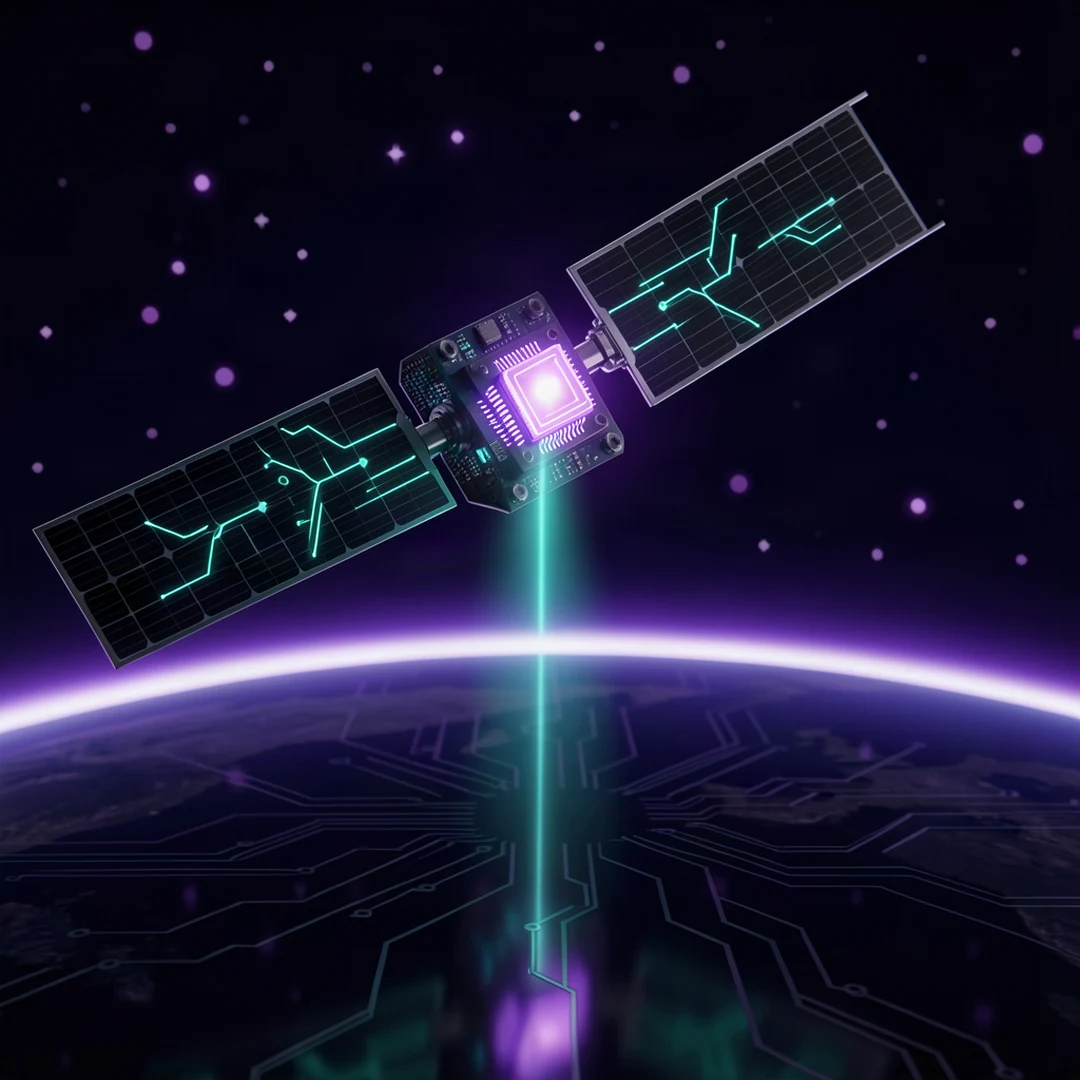
Google has received its first response from a TPU chip orbiting Earth. The Project Suncatcher prototype satellite, launched on October 1, 2026, generated a haiku with its onboard Gemma 4 model and beamed it back to a ground station. Google calls this the "Hello World" milestone for its moonshot to put AI data centers in space.
1. What happened
The satellite was built with satellite imaging company Planet and launched on a SpaceX rideshare mission on October 1. For about three weeks, the Google team worked through a commissioning checklist: powering up the host computer, powering up the TPU trays, and running early machine learning tests.
As the satellite passed over Svalbard, Norway, engineers uplinked a prompt asking the Gemma 4 model to write a haiku about being in space. The answer came down to Earth: "Blue marble below / Data streams in silent grace / Starlight feeds my core."
2. What is inside the satellite
The spacecraft carries four Trillium-generation TPUs, the kind of chip that normally sits in a rack at a data center on the ground. Its solar panels generate roughly 1 kW of electricity.
Because power is limited, only one TPU can run at a time, and each session lasts about 20 minutes. TechCrunch reported the same figures and ran a correction noting that the four TPUs can only operate one at a time.
3. A test, not a data center yet
The result proves the chips survived the rocket ride, the software stack runs, and the full uplink-to-downlink chain works end to end. It does not yet prove sustained workloads.
The harder tests come next: seeing how the TPUs handle thermal stress and radiation exposure in orbit. Both are serious problems for any computer in space.
4. Google's next steps
Google is targeting twin interconnected satellites in 2027. That pair would support higher power generation and demonstrate optical links between spacecraft.
The long-term vision is a cluster of closely flying satellites running AI inference workloads together, powered by the sun. At this stage it remains long-term research, not a product.
What it means for you
For most users, nothing changes today. But the direction matters: if AI computing can move to orbit, it opens up constant solar power and the cold radiative environment of space. It could also ease the strain that data centers put on power grids and water supplies on the ground. The timeline is long, and Google itself calls it a moonshot.
- No immediate impact: the AI services you use today still run from data centers on the ground.
- The real milestone is 2027: two satellites talking to each other is what proves the networking concept.
- Power is the bottleneck: the 1 kW limit and 20-minute sessions show electricity, not the chip, is the current constraint.
- Follow the official source: Google will share the heat and radiation test results in future blog updates.