Apple Launches AI Health Study for 200,000 Users
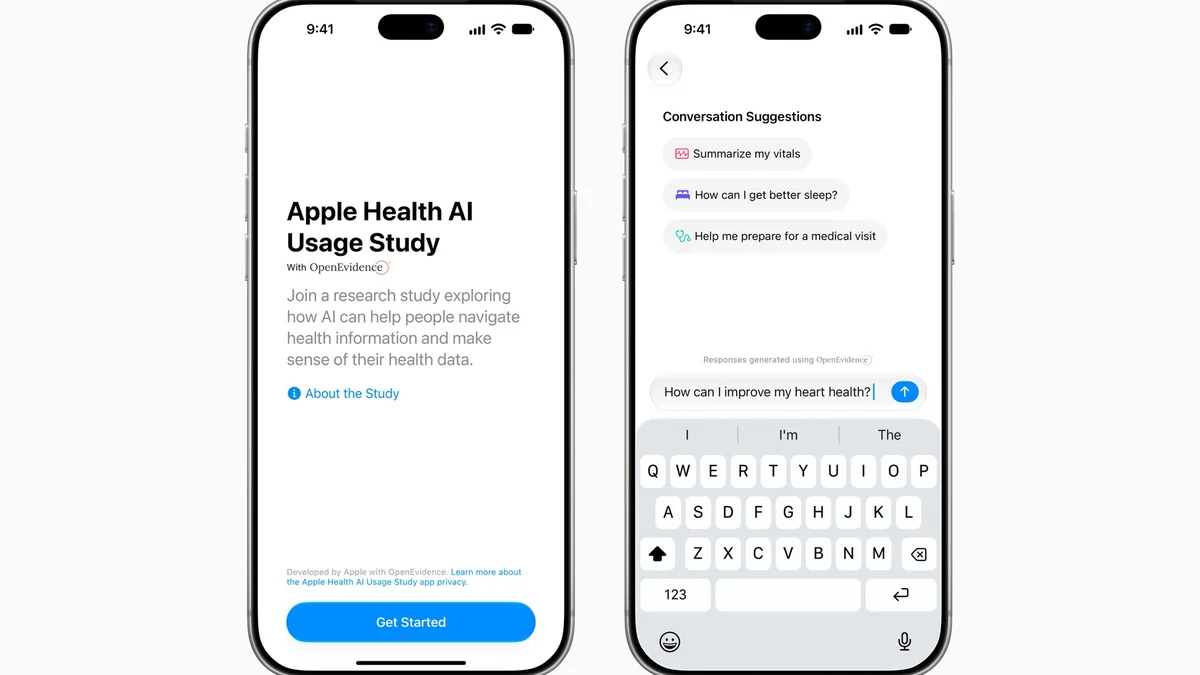
Apple has started the Apple Health AI Usage Study with OpenEvidence to examine how people use AI chatbots for health questions.
Apple has launched the Apple Health AI Usage Study in the United States, a research study examining how people interact with AI chatbots for health questions. It runs in collaboration with OpenEvidence, a clinical AI platform used by doctors. Apple announced the launch between November 15 and 17, 2026 at HLTH26, a digital health conference in Las Vegas.
1. What the study measures
The study tracks several things: what makes users trust AI answers, how well they understand them, and whether they act on them for their health. Every answer in the study app comes with links to peer-reviewed clinical sources such as The New England Journal of Medicine, JAMA and Nature.
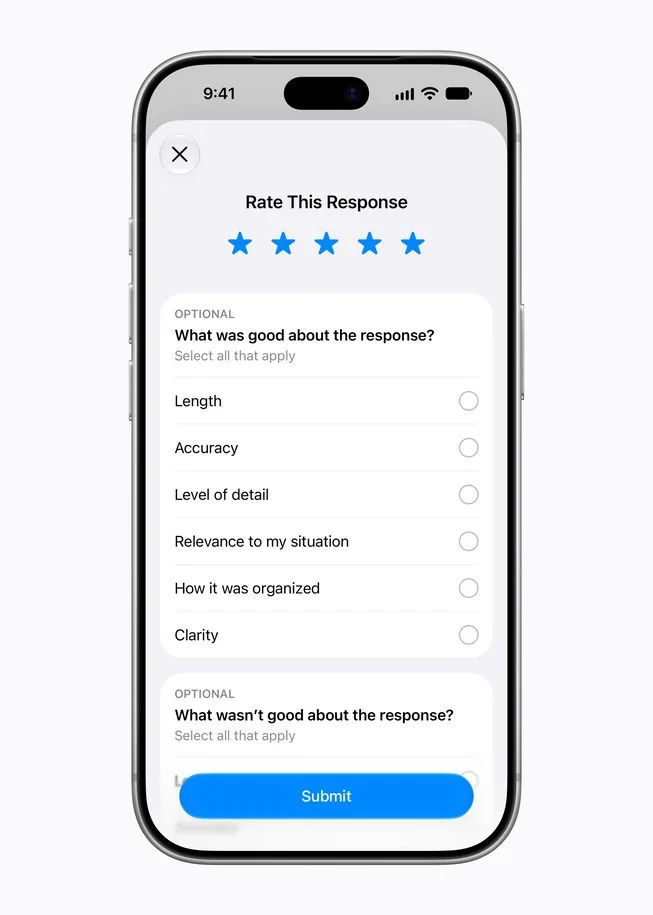
Participants can ask everyday health questions: symptoms, recovery after procedures, fitness or general concerns. They can also rate each answer and flag what was useful or lacking.
2. Who can join
The study is open to up to 200,000 participants in the United States, aged 21 and older. The requirement: an iPhone 15 Pro or later with Apple Intelligence enabled, running iOS 26 or later. The study app runs on Apple Intelligence, not an outside model.
Participants can stay in the study for up to 12 months. They complete an onboarding process with informed consent, then answer baseline and monthly surveys. Apple says an independent review board oversees the study.
3. Health data and privacy
Participants choose whether to share HealthKit data such as resting heart rate, activity, sleep or lab results. Sharing makes AI answers more personalized. Not sharing still leaves the app fully usable.
Apple states that study data will not be used to train AI models. The app also carries safety guardrails meant to detect certain concerning questions and suggest following up with a provider.
4. Preparing for the doctor's office
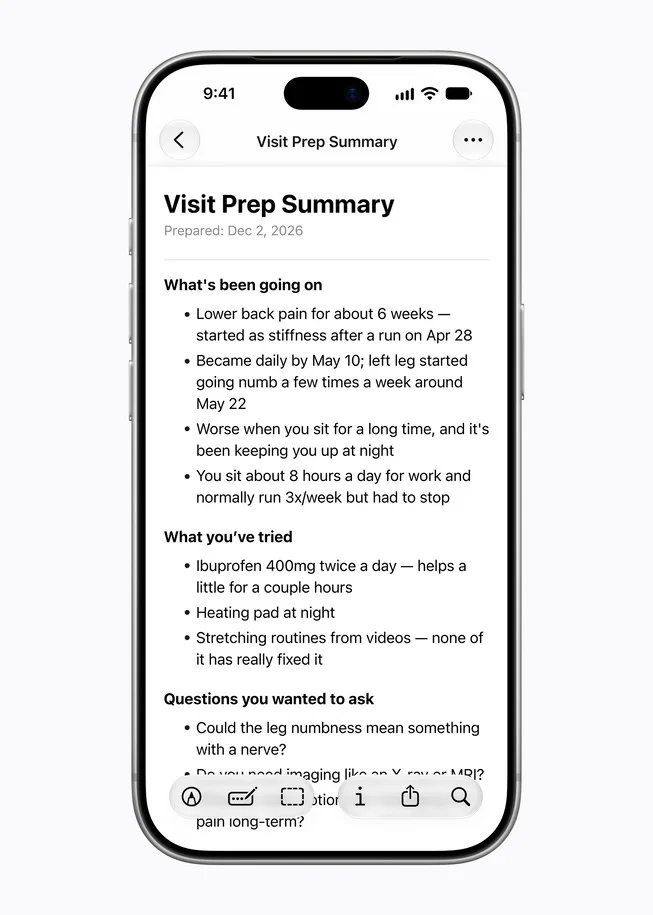
One goal of the study is to see how health AI can help patients prepare for clinical visits. An example Apple showed: the app breaks down past conversations and lists unanswered questions, so participants arrive at the clinic with a clear list.
After the visit, surveys gauge whether the AI summaries actually improved the conversation with the doctor. Dr Robert Wachter of UCSF, quoted in Apple's announcement, framed the idea: when patients and doctors use versions of the same trustworthy tools, patients arrive prepared and conversations improve.
5. Context: people already use AI for health
According to a KFF survey cited by Fierce Healthcare, about one in three US adults has turned to an AI chatbot for health information, with use even higher among younger adults. That figure comes from the KFF survey, not from Apple's study.
Apple notes that LLM-based consumer health tools can at times give incomplete or unclear responses, which is why a controlled study matters. The study app is not meant to diagnose or treat any condition, and Apple urges participants to consult a doctor to verify medical information.
What it means for you
- Do not replace your doctor: even with real medical sources behind it, Apple itself says the tool is no substitute for professional advice.
- Check the sources: when using any health chatbot, open the cited links instead of trusting the answer text alone.
- Malaysia will wait: the study is US-only for now, but its design hints at where Apple is heading with AI health.
- Compare tools: OpenEvidence only answers from peer-reviewed sources, something most general chatbots do not do.
- Share data carefully: if a health app asks for HealthKit access, read the privacy policy first and check whether your data trains models.